
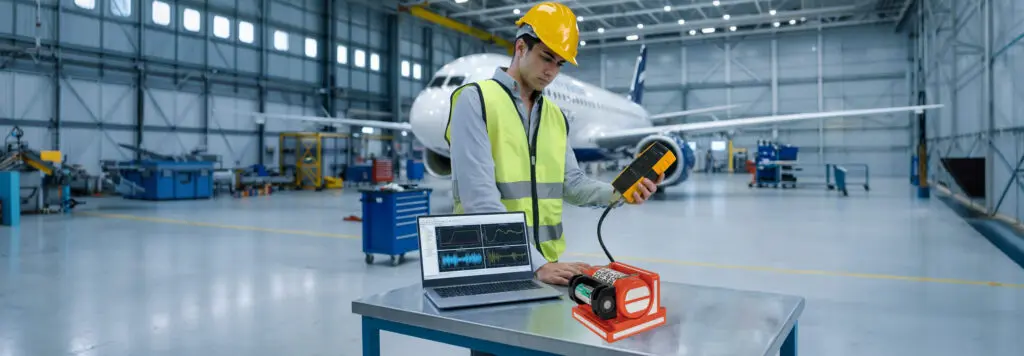
A 2-hour cockpit voice recorder keeps only the most recent 120 minutes of audio. If the aircraft keeps flying after an event, or the CVR circuit breaker is not pulled in time, the recording of that event is gone. That single limitation is why investigators, regulators and a growing number of operators are moving to 25 hours, and why it makes sense to specify a 25-hour unit at your next CVR replacement whether or not a rule yet requires it for your aircraft.
Where the 25-hour requirements stand today
- ICAO and EASA: aeroplanes over 27,000 kg first issued a certificate of airworthiness on or after January 1, 2021 must carry a 25-hour CVR. Aircraft already in service stay at 2 hours.
- FAA: the final rule published February 2, 2026 covers newly manufactured aircraft only, phased in by operation and weight: Part 121 and 30+ seat transport category aircraft built on or after May 16, 2025; Part 91, 125 and 135 aircraft at 59,525 lb or more built on or after February 2, 2027; and those at 59,524 lb or less built on or after February 2, 2029. In the FAA’s words, it is “proceeding only with forward fit in this rule.”
- US Congress: Section 366 of the FAA Reauthorization Act of 2024 sets May 16, 2030 as the date by which certain existing aircraft, those operated under Part 121 or type certificated for 30 or more passengers, must carry 25-hour CVRs. FAA InFO 26013 describes this as “self-enacting legislation.”
- Everyone else: in-service business aircraft, Part 135 fleets, lighter aircraft and most in-service aircraft outside the US have no 25-hour requirement today. The NTSB has recommended a retrofit since 2018, so that can change.
What investigators lose with a 2-hour loop
The NTSB has tracked the cost of short recording times for years. Its count is specific:
“Since 2018, at least 14 NTSB investigations have been hampered because cockpit voice recorder, or CVR, data were overwritten, including seven serious runway incursions that occurred in early 2023.”
NTSB, February 13, 2024
Those runway incursions included Austin in February 2023, where two airliners came within 100 feet of each other. NTSB Chair Jennifer Homendy described the pattern at the FAA Safety Summit the following month:
“Speaking of runway incursions, the 6 from this year that I mentioned earlier all have something in common: the cockpit voice recorder (CVR) was overwritten. Right now, you know that CVRs only need to record 2 hours of audio before they are overwritten, which is why we’ve recommended 25-hour CVRs.”
Jennifer Homendy, NTSB Chair, FAA Safety Summit, March 15, 2023
The January 2024 Alaska Airlines Flight 1282 door plug event added the most visible example:
“In the recent Alaska Airlines door plug blowout accident, our investigators don’t have the CVR audio to fully understand all of the challenges the flight crew faced in response to the emergency. Any investigation in which the CVR audio is overwritten and unavailable to us, means that we may miss opportunities to address safety issues identified on recordings. And that’s unacceptable.”
Jennifer Homendy, NTSB Chair, February 13, 2024
The common thread is that these were incidents, not hull losses. The aircraft landed, the operation continued, and the recorder kept looping. The NTSB’s 2018 recommendation report lists the July 2017 San Francisco event, where an A320 crew lined up to land on a taxiway, with a 2-hour CVR and a 46-hour notification delay. A 25-hour recorder turns that kind of reporting gap from a lost recording into a recoverable one.
The recording captures more than the conversation
The CVR is more than a record of what was said. Investigators also use it to hear what the flight deck sounded like. Speaking at a January 2024 news briefing on the Alaska event, Homendy explained:
“You can hear what’s happening with the engines. Often you can hear what’s happening with the door that blew open, headsets that might have flown off.”
Jennifer Homendy, NTSB Chair, as reported by CNN, January 8, 2024
Duration also matters before and after the event. The NTSB cites ICAO’s reasoning that “extended duration CVRs are necessary to cover the longest duration flights, including pre- and postflight activities.” On a multi-leg duty day, 2 hours may not cover a single complete flight, let alone the taxi, delay and turnaround that came before the event.
Why this matters to the operator, not only the investigator
When the audio is gone, findings rest on flight data parameters and crew recollection alone. Root cause takes longer to establish, and the corrective action an operator needs for its procedures, training and maintenance program can come later or not at all. When the FAA proposed the 25-hour requirement, then Administrator Mike Whitaker framed it the same way:
“This rule will give us substantially more data to identify the causes of incidents and help prevent them in the future.”
Mike Whitaker, FAA Administrator, November 30, 2023
A 25-hour recorder also takes the time pressure off the people on the ground. Securing the recording no longer depends on a crew or maintenance team pulling a breaker inside a 2-hour window after a busy, unusual flight.
The cost difference is close to zero
The usual objection to upgrading ahead of a mandate is cost. The FAA’s own analysis in the 2026 final rule answers it. The agency found that “manufacturers have already designed and certified newer 25-hour capable CVRs” and that “the difference between these units is minimal, ranging from near parity to an upper bound of approximately $5,209.”
The larger cost in any CVR change is the aircraft downtime and installation labor, and that cost is the same whether the new unit records 2 hours or 25. Installing a 2-hour recorder today locks the 2-hour limit in for that unit’s service life and risks paying for a second installation if a requirement reaches your fleet. Homendy put the practical side simply:
“You can easily install a different cockpit voice recorder and increase the time from two hours to 25 hours.”
Jennifer Homendy, NTSB Chair, as reported by CNN, January 8, 2024
What to check before your next CVR replacement
- Certification basis: the FAA rule calls for TSO-C123c or later; confirm the unit is certified to ED-112A.
- Mounting and connectors: confirm whether an adapter tray lets the new unit drop into the existing ARINC 757 or 747 installation without structural changes.
- Power: decide whether the installation needs a recorder independent power supply (RIPS).
- Download tooling: confirm your ground equipment can download 25-hour CVRs from every recorder type in the fleet, since 25-hour files are far larger than 2-hour files.
- Readout: confirm your readout provider supports 25-hour CVR files and can turn them around quickly.
How Flight Data Systems supports the move to 25 hours
The SENTRY® recorder family was built for this transition. SENTRY25 is the smallest and lightest ED-112A certified 25-hour CVR, at 97 cubic inches. Its base recorder function is FPGA-based with no airborne software, so DO-178C does not apply. Three ARINC adapter trays, 757 (70-0182-00), 757A (70-0183-00) and 747 (70-0184-00), let SENTRY25 replace an existing recorder in the same installation, and every current SENTRY customer has a service bulletin upgrade path to SENTRY25 on their own timeline. Orders are open now, with shipments beginning January 2027.
On the ground, HHMPI is the only licensed download tool compatible with all three 25-hour CVRs: SRVIVR25, HCR-25 and KAPTURE 25. For readout, Flight Data Systems delivers readout reports backed by 450+ aircraft databases with a TAT of less than 3 days.
Flight Data Systems has supported flight recorder operators and maintainers for 35 years.
Check your aircraft against the 25-hour CVR requirements
See which requirement applies to your aircraft and what the upgrade to SENTRY25 involves.
Learn more about SENTRY25 and Readout Services.
Sources
- NTSB, “NTSB: Retrofit all Cockpit Voice Recorder-Equipped Airplanes With 25-Hour CVRs,” February 13, 2024
- NTSB, Chair Homendy remarks, FAA Safety Summit, March 15, 2023
- NTSB, Safety Recommendation Report ASR-18-04 (A-18-30 and A-18-31), 2018
- FAA, “FAA Proposes Requiring 25-Hour Cockpit Voice Recorders,” November 30, 2023
- Federal Register, 25-Hour Cockpit Voice Recorder (CVR) Requirement, New Aircraft Production, final rule, February 2, 2026
- FAA, InFO 26013, Requirements for Aircraft to be Equipped with 25-Hour Cockpit Voice Recorders, August 10, 2026
- Commission Regulation (EU) 2015/2338, CAT.IDE.A.185
- CNN (Gregory Wallace), “Cockpit voice recorders only record 2 hours at a time. The NTSB chair wants it to be 25 hours,” January 8, 2024
