
Fall 2026 (Q4) | The 25-Hour Era
SENTRY25
The Lightest 25-Hour Recorder.
Independent Power supply (RIPS).
Lasting Global Compliance.
The newest SENTRY recorder delivers: 25-hour CVR and CVFDR in the same compact, titanium, ED-112A-certified design trusted across commercial, rotorcraft, military, and AAM platforms.
Regulatory Readiness
Three Countries. Three Mandates. One Recorder.
The world moved in 2021, when ICAO and EASA began requiring 25-hour cockpit voice recorders on new aircraft. The FAA set the bar further, regulating by operation under Parts 91, 121, 125 and 135 rather than by weight alone. That rule covers newly manufactured aircraft. Retrofit is set separately, by statute, for May 2030, and the FAA has not yet published the rule that implements it. Here is where each jurisdiction stands today.
United States
Forward fit in force. 2030 retrofit set by statute.
The FAA Reauthorization Act of 2024 set the 25-hour CVR requirement in statute. The final rule published February 2, 2026 covers new production, with large transport aircraft compliant since May 2025 and smaller categories phasing in 2027 to 2029. The final rule covers forward fit only; the FAA stated it is not including retrofit while it examines the cost further.
Canada
Exemptions expired May 2026
RIPS and 2-hour CVR exemptions expired in May 2026, bringing 1,000+ aircraft into scope immediately. A broader 25-hour fleet mandate is in rulemaking, expected in the 2026 to 2027 window.
Comply today. Future-proof for the 25-hour rule tomorrow.
Mexico
Already required since 2022
Mexico’s AFAC recorder mandate, aligned with ICAO Annex 6, has been in force since December 2022. Operators flying into Mexican airspace need compliant 25-hour-capable equipment now.
This is not a future deadline. It is a current obligation.
Check Your Fleet for Compliance Now.
Use this simple tool to determine if your aircraft meet the mandates for 25-HR CVRs.
Where is your aircraft registered?
Recorder requirements differ by jurisdiction. We cover the three converging North American mandates.
Is the maximum takeoff weight 59,525 lb (27,000 kg) or greater?
This threshold separates large transport aircraft from smaller categories in the US phase-in schedule.
When was the aircraft manufactured?
New-production rules apply from a date of manufacture. Older aircraft fall under retrofit timelines.
Where do you operate?
Cross-border operations can pull an aircraft into more than one mandate at once.
What does the aircraft carry today?
This tells us whether you are upgrading a 2-hour unit or specifying new equipment.
Get your fleet compliance summary
A one-page PDF with your status, the relevant deadlines, and the SENTRY25 models that fit. Sent to your inbox.
Please enter a valid email address.
Thank you. Your summary is on its way.
Informational only. This tool does not constitute a regulatory compliance determination. Confirm requirements with your civil aviation authority and a qualified avionics provider before making installation decisions. Regulatory data current as of June 2026.
The Mandate Window
The Compliance Clock: 2022 to 2030
Every aircraft currently required to carry a CVR will need a 25-hour-capable recorder. The only questions are when, and with which partner.
- DEC 2022: Mexico's AFAC mandate takes effect for covered aircraft under the ICAO Annex 6 aligned rule
- MAY 2024: FAA Reauthorization Act signed; Section 366 sets the statutory 2030 retrofit deadline
- MAY 2025: US forward fit begins for newly manufactured large transport aircraft
- FEB 2026: FAA final rule published (Docket FAA-2023-2270) covering new production
- MAY 2026: Canadian RIPS and 2-hour CVR exemptions expire; 1,000+ aircraft in scope
- MAY 2026: FAA correction amendment published, fixing typographical and formatting errors in three sections of 14 CFR. Scope of the final rule is unchanged
- 2026 / 2027: Transport Canada 25-hour fleet mandate expected from current rulemaking
- 2027 / 2029: US forward fit extends to smaller weight categories (Parts 91 / 135)
- 2030: US statutory retrofit deadline, implementing rule not yet published; an estimated 13,500+ aircraft in scope
Installation capacity will tighten as 2030 approaches. Early movers win.
Why 25 hours matters
Extending cockpit voice and flight data recording to 25 hours gives investigators and operators complete data across every phase of flight, improving accident investigation, safety analysis, and operational oversight.
Fuller accident investigation
Twenty-five hours of cockpit audio and datalink messages give investigators a complete timeline rather than a final fragment. That matters most when an event begins during departure or in the middle of an extended flight, exactly the cases where a two-hour loop has already been overwritten.
Stronger safety findings
Longer recordings support deeper analysis, which leads to better-informed safety recommendations and the policy changes that prevent the next incident. More data is not just more evidence after the fact, it is the basis for prevention.
Beyond global standards
Most countries require 25-hour recording only on heavier aircraft. The US standard reaches a wider range of the fleet, so more operators are covered and a single recorder keeps you compliant across every border you cross.
Since 2018, the NTSB has identified at least 14 accident investigations compromised by cockpit audio that was overwritten before the recorder could be secured.
Source: National Transportation Safety Board
Next-Generation SENTRY
One Swap. Total Compliance.
Across the US, Canada, and Mexico, every aircraft required to carry a CVR will need a 25-hour-capable recorder. SENTRY25 delivers that capability in the lightest, most compact, and most energy-efficient ED-112A-certified recorder family on the market.
Same footprint. Same interfaces. Same modular, upgrade-friendly architecture your fleet already trusts. The only thing that changes is how much of the story you capture: 25 hours of cockpit voice, 12.5x a legacy 2-hour unit.
Models
SENTRY25 Model Selection
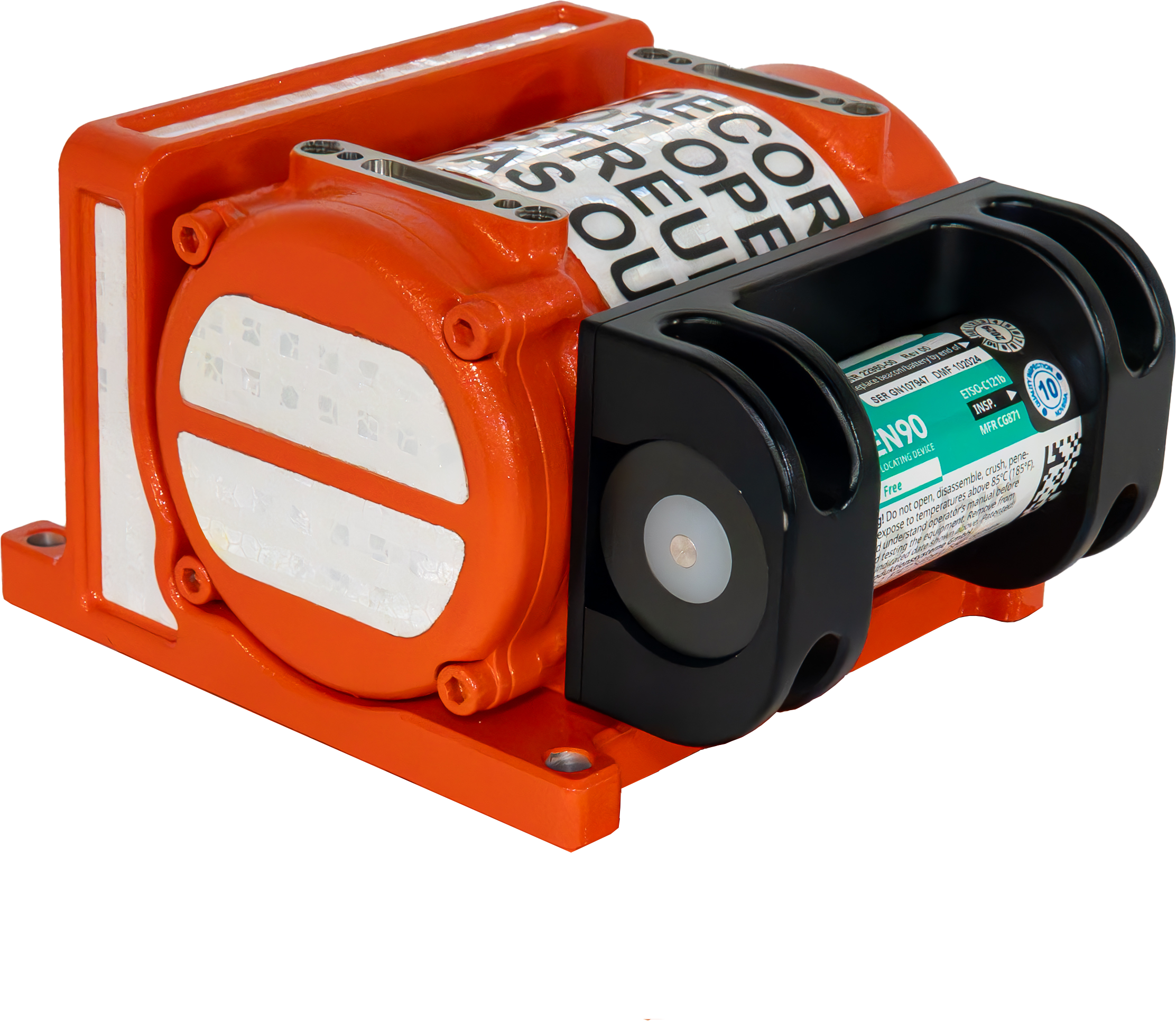
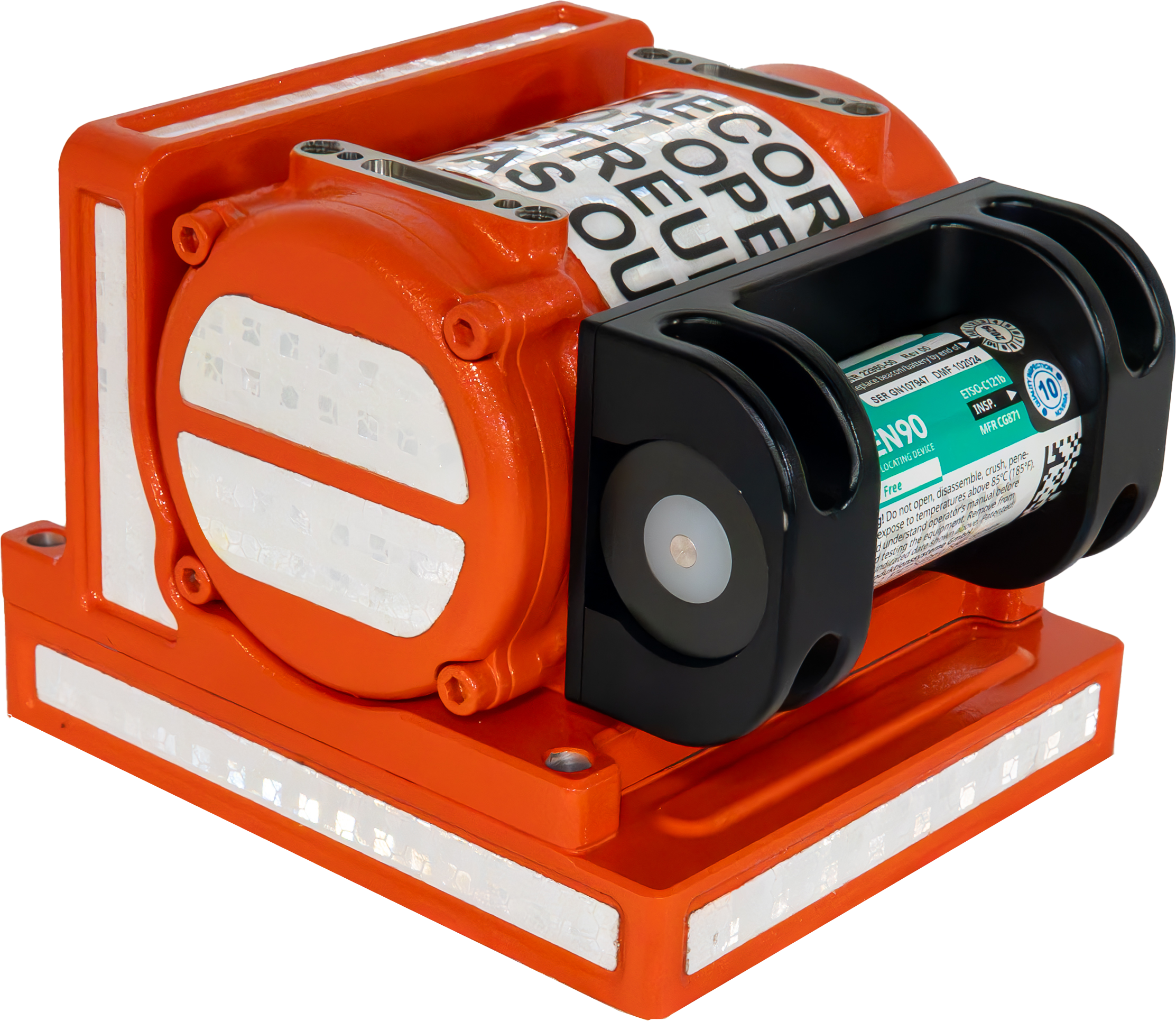
Available as a 25-hour CVR or combined CVFDR, with or without the integrated 10-minute Recorder Independent Power Supply (RIPS).
- SENTRY25 Models
- FDS84-2401: SENTRY25 Cockpit Voice Recorder (CVR)
- FDS84-2501: SENTRY25 CVR with Integrated RIPS
- FDS84-3401: SENTRY25 Cockpit Voice and Flight Data Recorder (CVFDR)
- FDS84-3501: SENTRY25 CVFDR with Integrated RIPS
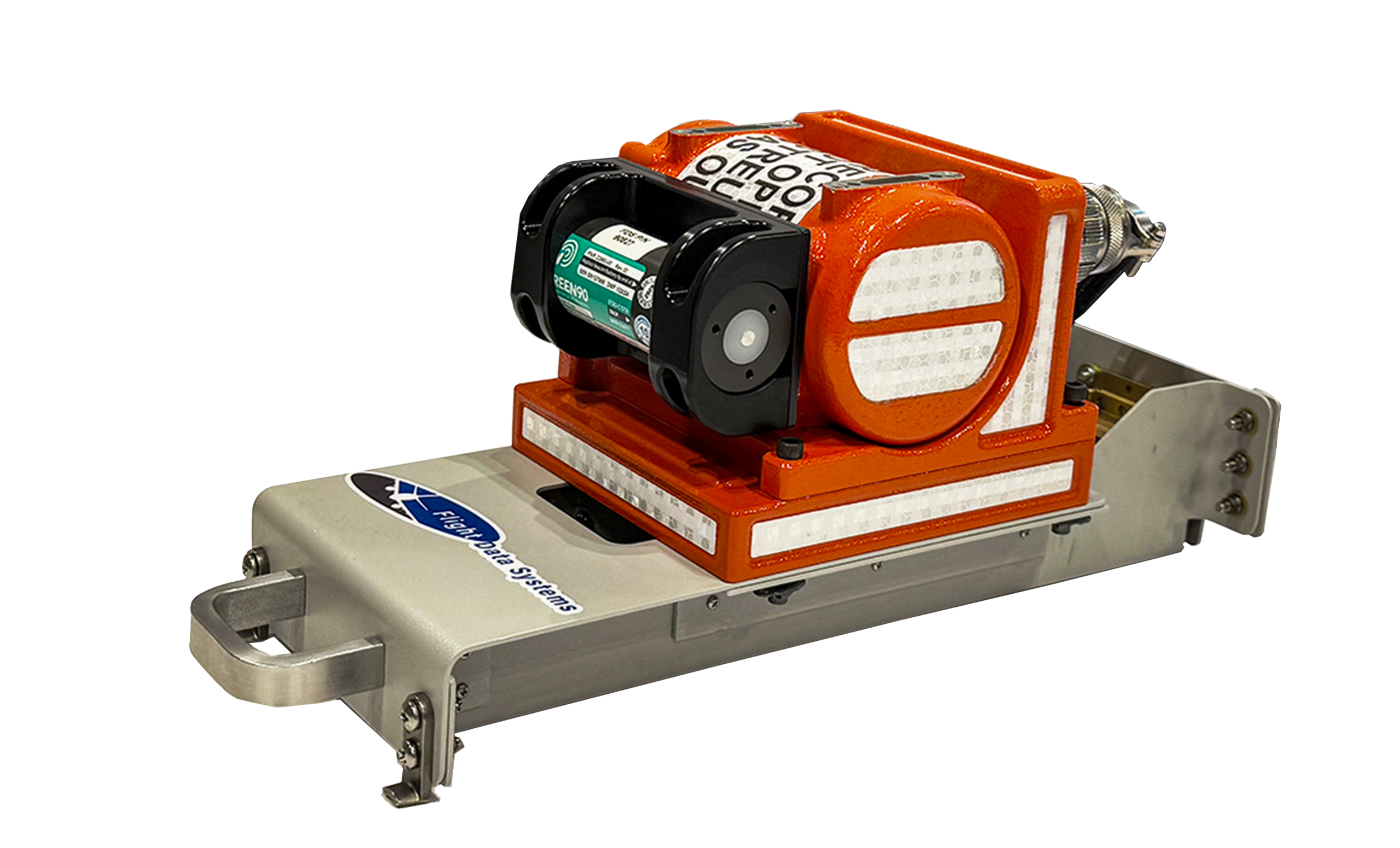
- Adaptor Trays
- 70-0182-00: ARINC 757A, CVR, 1/2 ATR Short, Single Insert Connector
- 70-0183-00: ARINC 757, FDR/CVR Combo, 1/2 ATR Short, Single Insert Connector
- 70-0184-00: ARINC 747, FDR, 1/2 ATR Long, Dual Insert Connector
Features
- 25 hours of cockpit voice recording
- Compact: 3.3 in. H x 4.9 in. D x 6.0 in. W
- Low weight: 4.5 lb (2 kg)
- Lightweight titanium enclosure with FPGA architecture
- Innovative memory protection system (patent pending)
- Meets or exceeds ED-112A; qualified to DO-160G
- Optional 10-minute Recorder Independent Power Supply (RIPS)
- Ethernet, ARINC-717 and ARINC-429 (auto detection), RS-422/485
- Four configurable high or low-fidelity audio channels
- Data Link recording; analog, discrete and rotor speed inputs
- Flange mount in any attitude using captive hardware
- TSO and aircraft-specific configurations (Certification in progress)
Who It's For
Built for Every Operator Facing the Mandate
US Part 121 Airlines
New aircraft already require 25-hour CVRs and retrofit by 2030 is statutory. Be 2030-ready today: one swap, total compliance.
Parts 91 / 135 Business Aviation
Forward fit phases in 2027 to 2029, and Mexico operations require 25-hour capability now. One unit covers both.
Exemptions expired May 2026 and the 25-hour mandate is in rulemaking. Comply today, future-proof for tomorrow.
MROs and Completion Centers
Demand is surging across all three markets at once. One part family, one training program, a simplified workflow.
Already managing a fleet?
Keep your recorders compliant between now and 2030
Download, verify, and report on the recorders already in your aircraft, whatever the OEM.
HHMPI
The handheld download tool technicians trust. Supports 100+ airframes across Acron, L3, L3Harris, Honeywell, Universal, GE, and more. V3 now downloads 25-hour CVRs. No training required.
Readout Services
Regulator-ready CVR, FDR, and DLR reports in three business days or less. 35 years of expertise, 450+ recorder databases, certified to FAA, EASA, ICAO, and more.
SENTRY25 Frequently Asked Questions
Does SENTRY25 satisfy the FAA, Transport Canada, and AFAC mandates with one unit?
Yes. SENTRY25 is built to EUROCAE ED-112A, the standard underpinning the 25-hour CVR requirements across the United States, Canada, and Mexico. One part number keeps your fleet compliant across every North American border you cross, rather than managing different configurations by jurisdiction.
When will SENTRY25 be available?
SENTRY25 is targeting TSO certification in Q3 2026, with product availability planned for Q4 2026, subject to certification completion. With installation capacity expected to tighten as the 2030 US retrofit deadline approaches, early planning protects your place in line.
We already operate SENTRY recorders. Is there an upgrade path to 25 hours?
Yes. Operators currently running the 2-hour SENTRY CVR or CVFDR can transition to the 25-hour version through a Service Bulletin upgrade, allowing a move to 25-hour recording without a wholesale equipment change.
What is RIPS, and does SENTRY25 include it?
A Recorder Independent Power Supply maintains recording for 10 minutes after a loss of aircraft power, capturing the final moments that matter most in an investigation. SENTRY25 offers an integrated RIPS option, keeping the backup power within the recorder envelope rather than adding a separate line-replaceable unit.
Will SENTRY25 fit our aircraft and mounting?
SENTRY is designed around reduced size, weight, and power, in a titanium enclosure qualified to DO-160G and suitable for fixed-wing, rotorcraft, military, and AAM platforms. It can be flange-mounted in any orientation where space is limited. Aircraft-specific configurations are available; contact us to confirm fit for your platform.
How do we download data once SENTRY25 is installed?
Data retrieval is handled with the FDS Handheld Multipurpose Interface (HHMPI), a portable tool that downloads from SENTRY and from most major OEM recorders. The current V3 HHMPI supports 25-hour CVR downloads. Operators who prefer a managed approach can pair installation with FDS Readout Services for annual serviceability checks and regulator-ready compliance reports.
What happens if we wait?
The deadlines are fixed and the 2030 US retrofit obligation is already running. As more operators move at once, installation slots, certified equipment, and qualified labor all come under pressure. Checking your fleet’s status now keeps planning on your schedule rather than the calendar’s.
Skip the Spec Hunt. Get the Brochure.
